
TP/SL Price Protection is a feature that protects traders from extreme market conditions and mitigates the risk of triggering Take Profit/Stop Loss (TP/SL) orders at unintended prices during periods of high market volatility.
TP/SL Price Protection is specifically designed for setting TP/SL using the Last Traded Price (LTP) as the trigger reference price on Perpetual and Futures Contracts. The Price Protection settings will not apply to TP/SL orders using Mark Price or Index Price as the trigger reference. Orders placed via API won’t be affected by the Price Protection function.
Key Advantages of TP/SL Protection
- Shield against extreme volatility: Price Protection can prevent your orders from being executed prematurely during periods of high volatility.
- Control over order execution: Orders can be executed closer to the market’s consensus price, rather than being affected by short-term spikes or dips.
How Does TP/SL Price Protection Work?
In TP/SL Price Protection, Spread denotes the difference between the Mark Price and Last Traded Price (LTP), and it is represented by the following formula:
Spread = abs(Last Trade Price - Mark Price) / Mark Price x 100% (rounded to 2 decimal places)
Each trading pair has a corresponding Price Protection threshold. Users can decide whether to enable the Price Protection function for selected or all trading pairs.
After enabling the Price Protection function, it will prevent TP/SL from being triggered even when the LTP has reached the trigger price if the spread falls out of the protection threshold, until the spread returns within the protection threshold.
Example
Suppose the current BTCUSDT is trading at 46,500 USDT. Trader A places a limit buy order at 45,500 USDT and sets a Stop Loss (SL) order to be triggered when the Last Traded Price reaches 43,000 USDT.
When the LTP for BTCUSDT reaches 45,500 USDT, the limit buy order is executed. The market then experiences a period of extreme volatility, creating a significant disparity between the Mark Price (45,500 USDT) and the LTP (43,000 USDT), with a spread of around -5.4%.
Without TP/SL Price Protection, the SL order would have been triggered at 43,000 USDT, missing out on opportunities to gain from potential price rebounds. However, with TP/SL Price Protection enabled and assuming the price protection threshold for BTCUSDT is ±5%, Trader A’s SL order will be blocked from being prematurely triggered, as, in this case, the spread (-5.4%) exceeds the protection threshold. Trader’s A SL orders will remain in the order book and will be executed once the spread returns to the protection threshold and the price trigger is met.
Risk
Price Protection serves as a valuable tool in various trading scenarios, yet its efficacy is contingent upon the trader's objectives, strategy, and prevailing market conditions.
In swift-moving markets marked by genuine price changes, the application of Price Protection may hinder order execution, potentially causing missed opportunities for profit or impeding risk-management exits if the price does not go back to the trigger price.
The complexity introduced by this tool necessitates an additional layer of decision-making in the trading process, requiring careful consideration of when its implementation is advantageous and when it may act as a hindrance.
While Price Protection can offer a safeguard against extreme market anomalies, prudent and strategic utilization is paramount to align it effectively with one's overall trading approach.
How to Set TP/SL Price Protection
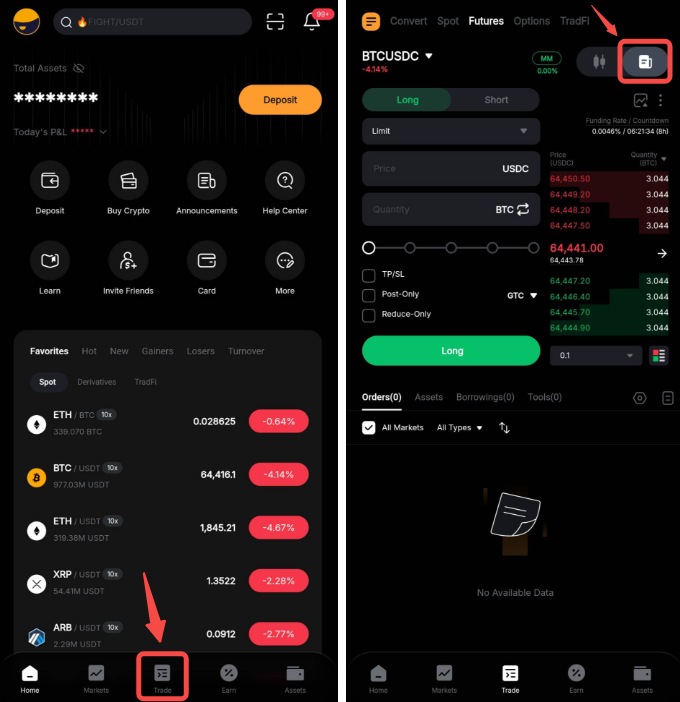
Step 1: Launch the Bybit App and go to the Futures trading page of your preferred trading pair.
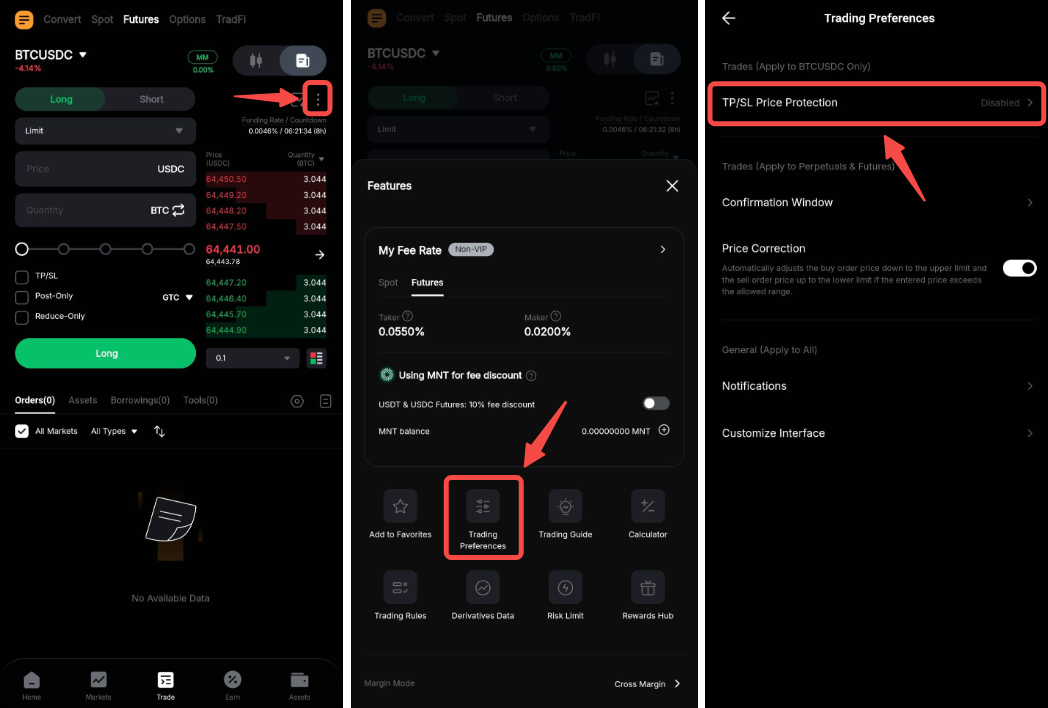
Step 2: Tap on the ellipsis on the top right corner and select Trading Preferences.
Step 3: You can activate/deactivate the options based on your personal preference.
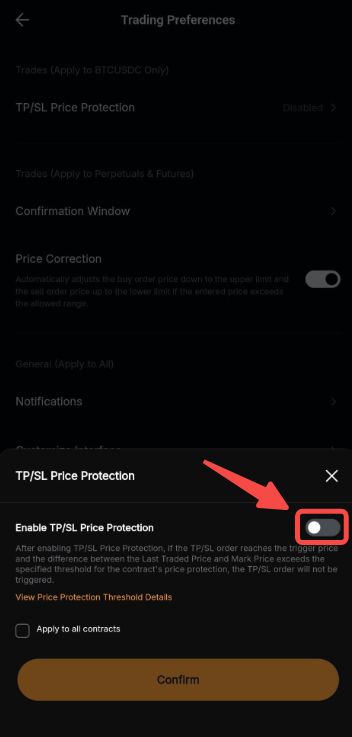
Note: If you want to apply Price Protection to all symbols, choose Apply to All Contracts.
The Price Protection function is enabled! You should receive an email notification if your TP/SL is not triggered due to TP/SL Price Protection.